When most people hear the word “health,” they think about going to the doctor, taking medicine, or eating right. And while those things matter, they don’t tell the whole story, especially for mothers who are facing some of life’s hardest challenges.
The truth is, a person’s health is shaped by much more than what happens in a doctor’s office. It’s shaped by everyday life. Where you sleep at night. Whether you feel safe at home. Whether you can afford groceries. Whether you have someone to call for help.
For mothers experiencing homelessness or leaving a dangerous relationship, these everyday realities can feel overwhelming, and they have a real, lasting impact on their health and well-being.
At Marguerite’s Place, we understand this deeply. That’s why everything we do is designed to address not just the immediate crisis, but the holistic picture of what a mother needs to truly be well.
So What Actually Shapes Our Health?
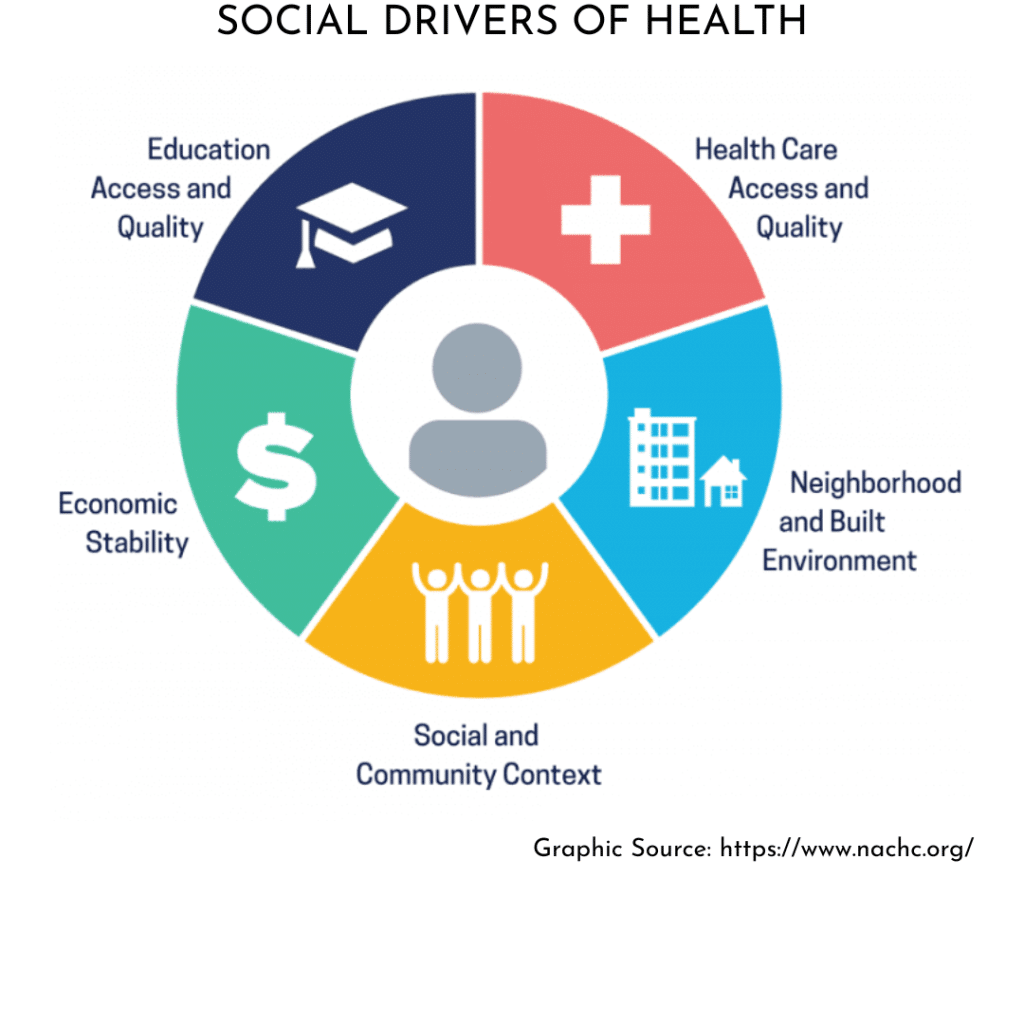
Researchers and doctors have coined the phrase: social drivers of health (sometimes called social determinants of health). It’s a way of describing all the outside factors (beyond medical care) that influence how healthy we are.
Think of it this way: it’s hard to focus on eating well or managing stress when you don’t know where your family will sleep tonight. It’s hard to heal from trauma when you don’t feel safe. It’s hard to move forward when you’re doing it completely alone.
For mothers in our community who are experiencing homelessness or domestic violence, several of these drivers are especially important. Let’s go through them one by one.
1. A Safe, Stable Place to Call Home
Everything starts with housing. When a family doesn’t have a safe, stable place to live, almost everything else becomes harder: keeping a job, helping kids with school, taking care of your own health, and healing from past trauma.
Here in NH, housing costs have risen far beyond what most single mothers can afford. Some of the moms who come to Marguerite’s Place have faced an unthinkable choice: stay in a home where they don’t feel safe, or leave with nowhere to go.
No mother should ever have to make that choice.
When a family walks through our doors, the first thing we offer is safety. A place to breathe. A place to start over. And from that foundation, everything else becomes possible.
2. Financial Stability
Money stress is one of the biggest health risks many people never talk about. When a mother can’t cover basic needs like rent, food, childcare, and getting to and from work, the stress is constant. And constant stress takes a real toll on the body and mind over time.
In NH, the numbers are eye-opening: raising two children costs more than double the median salary of a single mother. That gap isn’t a reflection of how hard someone is working. It’s a reflection of how difficult the system can be to navigate when expenses far outweigh full-time salaries.
Financial instability also traps people. It can make it harder to leave an unsafe relationship. It forces impossible choices, like whether to pay a bill or buy groceries.
Financial Wellness classes, like those offered at Marguerite’s Place, not only help mothers build credit, learn how to budget and save, etc., but they also connect families to employment and community resources. A mother achieving financial stability and independence is one of the most powerful things she can do for her health and her future.
3. Freedom from Violence and Trauma
80% of mothers experiencing homelessness have previously survived domestic violence.
And that traumatic experience doesn’t end when someone leaves a dangerous relationship. The effects on mental health, on physical health, on parenting, and on a person’s sense of self can last for years.
When survivors of domestic violence initially come to Marguerite’s, many struggle with anxiety, depression, or difficulty trusting others. These are natural responses to crises.
Healing from trauma takes time, safety, and support. That’s why we practice trauma-informed care, which means we recognize what our families have been through, and we meet them exactly where they are. Every case manager, every staff member, is trained with this approach in mind.
4. Education, Jobs, and the Chance to Move Forward
Having a job or pursuing education is about more than achieving a desired salary. It’s also about having purpose, routine, and connection. All of these things contribute to a person’s overall well-being.
Many mothers in our programs have gaps in their work history or education, not by choice, but because they were doing what they needed to do to survive. Leaving a violent relationship, navigating homelessness, and protecting their children often had to come first.
We never judge those gaps. Instead, we help our residents figure out what they want for their future and take steps toward it, whether that’s finishing school, learning new job skills, or stepping into a career for the first time.
When a mother finds her footing and starts moving toward her goals, her children notice. They see it. They learn from it. And the generational shift begins.
5. Community and Connection
One of the most harmful effects of domestic violence is isolation. Abusive relationships often separate mothers from friends, family, and community, leaving them without people to lean on during some of the hardest moments of their lives.
Mothers need community, too. Parenting was never meant to happen in isolation, yet many moms, especially those experiencing domestic violence, housing instability, or postpartum challenges, find themselves carrying overwhelming responsibilities without the support systems they need.
Studies show that when people feel supported and connected, they’re healthier, more resilient, and far less likely to struggle with their mental health, especially during the hardest seasons of life. Community is a health need!
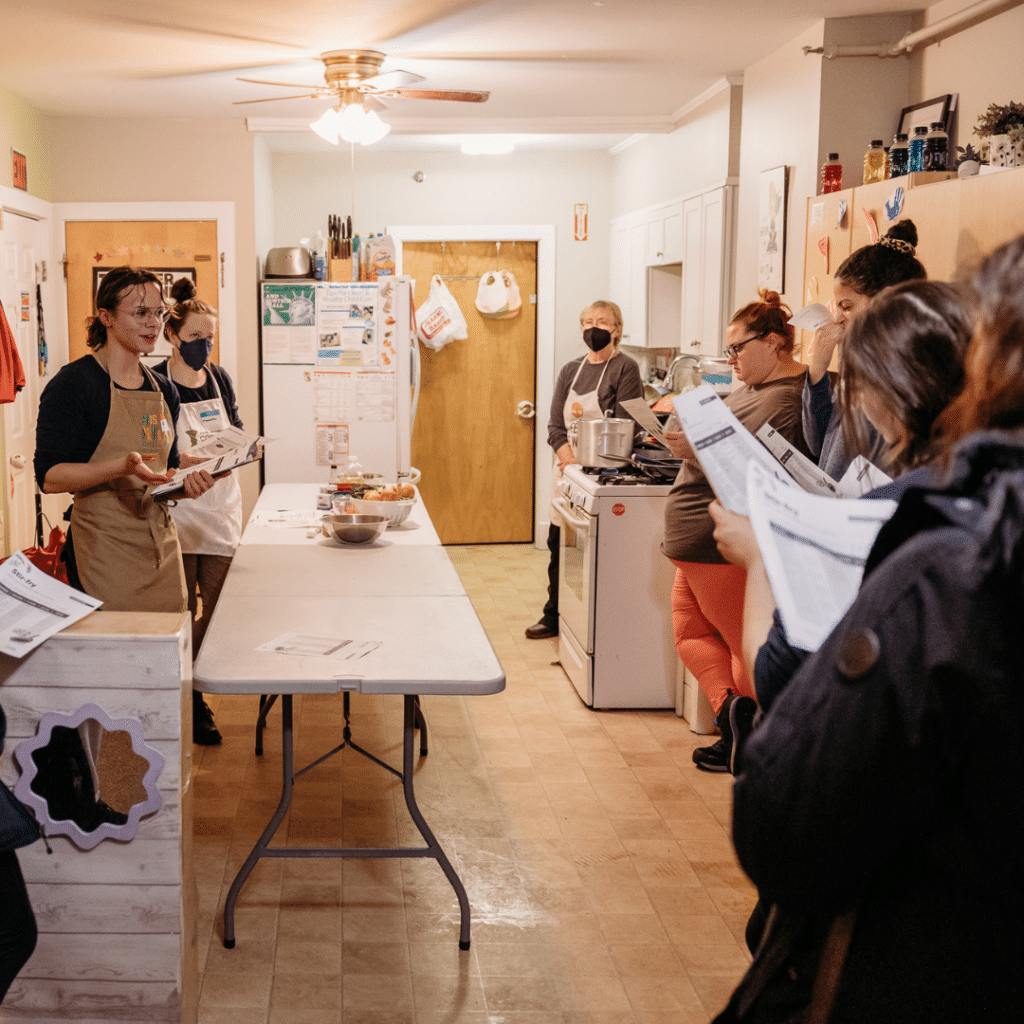
That’s why the Marguerite’s Place Community Programming is designed to offer education and resources AND create connection by bringing together Residents and childcare families who understand the challenges of motherhood, stress, healing, and building stability.
6. Food and Healthcare
Rounding out the social drivers of health: mothers and children need access to nutritious food and basic healthcare to be well. But when a family is in crisis, these things are often the first to fall away. Meals get skipped. Doctor’s visits get put off. Small health problems quickly become bigger ones.
Our team works closely with community partners and local organizations, like Grow Nashua, Lamprey Healthcare, Greater Nashua Mental Health, to connect families to healthcare providers, food assistance, mental health resources, parenting support, and other critical services. We recently installed a mini pantry in our office to help ensure families have immediate access to essentials like snacks, pantry staples, diapers, and hygiene items.
We are deeply grateful for the community partners who help make this possible. Because true stability is not built by one resource alone, but by a community willing to show up for one another.

Here’s the important takeaway: the challenges we’ve described are not permanent. Conditions can change when members of a community come together to support one another.
And you can be part of how that change for families at Marguerite’s Place:
- Give. Your donation funds the housing, programs, and support that help mothers and children rebuild their lives.
- Advocate. Learn about the barriers that keep mothers in crisis and speak up for change in your community.
- Connect. Share our content. Talk about what we do. Invite someone to learn more. The more people who understand what’s at stake, the more powerful our community of support becomes.
The mothers we serve want what every mother wants — to be well, to feel safe, to raise their children with confidence and love, and to build a legacy they’re proud of.
This month, and every month, with the help of our generous supporters and community partners, that is exactly what we strive to make possible.